Home - Shopping
10 common mistakes to avoid while gifting flowers
01

10 common mistakes to avoid while gifting flowers

Gifting flowers is a heartfelt way of expressing one’s love, care, or concern. From hospital visits and funerals to anniversaries and birthdays, flowers are a versatile gift for just about any occasion. However, people often end up making some common errors when giving flowers, some of which may be embarrassing. Read on to learn more about some of them, along with simple ways to make floral arrangements a truly memorable gift! Not considering the occasion Flowers convey a lot of emotions. That is why it is essential to consider the occasion before picking out an arrangement. Generally, it is a good idea to opt for muted flowers (in colors of yellow, white, or blue) for funerals and memorials. Opt for brighter, more upbeat colors to denote joy and excitement for celebratory days such as birthdays, special occasions, dates, and anniversaries. Failing to understand their symbolism When gifting flowers, one must also be aware of their hidden language. Over the years, flowers have come to symbolize a lot of emotions. Here is a list of commonly gifted flowers and what each one of them represents: Heather – Good luck Lotus – Rebirth, self-regeneration, and purity Pink tulips – Well wishes, happiness, and love Yellow roses – Friendship and happiness Red roses – True love and desire Pink roses – Grace, happiness, and gentleness Dark Crimson Rose – Mourning Orange tulips – Understanding and appreciation White Lily – Sympathy, purity Pink Lily – Prosperity Orange Lily – Pride Yellow Lily – Gratitude Begonias – Gratitude, uniqueness, or even caution Hyacinth – Games, sport, and play Pink carnation – Memory, young love Daisy: Innocence Sunflower – Joy and happiness Hibiscus – Delicate beauty Lavender – Devotion and relaxation Buying last minute Tons of flower delivery services now offer last-minute ordering facilities. While this can be a saving grace when one is running short on time, constantly resorting to these services may not be the best idea.
Read More

8 things to consider before choosing a business gas card
02

8 things to consider before choosing a business gas card

Business gas cards, also known as fuel cards, are used by businesses to refuel tanks at specific fuel stations. Various card providers issue these cards that come with different fueling networks. Some networks may be limited to a particular area, while others may be available nationally. Businesses need to carefully consider their requirements and options before making an informed decision. Some card providers may even offer discounts, rewards, roadside assistance, and other similar perks to the fleet members. Consider data collection Choosing the right business gas card can give the individual access to monitor and track the purchases of others in their fleet. Look for a card that allows businesses to collect this data, as this information can help organizations understand their fuel expenditure better and optimize them. The data may contain factors like price per gallon of fuel, refueling location, and type of fuel purchased. These patterns can help optimize individual fleet members’ spending habits and improve the business’s savings ability. Limited spendings Business owners can look for gas cards that let them control the purchasing power of their drivers. Fleet managers or businesses can set limits for each member and ensure they are each assigned a unique pin that will be used for their purchases. These measures can also prevent the misuse of the cards. Alerts are sent to the user when one tries to use the card beyond the purchase limit. Businesses can look at options that let them set limits for each driver for a day, week, or year. Online access Businesses no longer need to worry about writing down driver records and keeping a stack of paper receipts for proof. Selecting the right fleet card can provide business owners with the required information at their fingertips. Thanks to the online availability of data, record-keeping is fairly convenient.
Read More
9 tips to choose the right water bottle
03

9 tips to choose the right water bottle

Nothing is more beneficial for the body than having plenty of water throughout the day. From glowing skin to a healthy digestive system and better absorption of nutrients, water does a world of good. And that’s why filling up one’s water bottle first thing in the morning is a great idea to stay hydrated throughout the day. There’s a variety of water bottles available today; here are some tips to pick the right one: 1. Check if it maintains the temperature of the water While some people are absolutely fine with having water at room temperature, others require ice-cold, warm, or hot water. If one likes water to remain at a specific temperature, one should look for vacuum-insulated bottles. Here, the water in the bottle is protected from the air temperature outside, which retains its temperature. Stainless steel vacuum-insulated water bottles are the most common on the market. Copper-lined bottles and bottles with double-walled construction also provide sufficient insulation. 2. Consider the bottle’s size and volume The ideal size of one’s water bottle depends on how much daily water one needs and the duration one must wait before refilling it. For example, those commuting to and from work daily may be unable to refill their water bottles during this time. So, they may require bottles of larger capacities so that there is enough water to reach their destinations. In contrast, those working from home or at an office nearby may not need large-sized bottles because they can easily have their bottles refilled. These factors should be considered when buying a water bottle. 3. Ensure that the lid is firm and tight A lid may not seem like a big deal, but there’s nothing messier than a leaky water bottle. So, it is essential to buy water bottles whose lids are firm and tight but open up quickly when needed.
Read More
7 eco-friendly mistakes to avoid when shopping
04

7 eco-friendly mistakes to avoid when shopping

Over the last few years, many people have become more environmentally conscious. This has prompted them to make sustainable lifestyle choices, such as avoiding plastic bags, recycling, investing in eco-friendly products, etc. However, this is not enough. With modern marketing and misleading branding, many of these perceived “sustainable” acts may harm the environment. Read on to learn more about seven sustainable shopping mistakes that aren’t as eco-friendly and must be avoided. Constantly buying reusable shopping bags For a while now, cotton tote bags have been promoted as the more environmentally friendly option for shopping. While this is true compared to single-use plastics, one must also look at the ecological impact of repeatedly buying and discarding reusable bags. Over time, these end up in landfills, thus increasing waste production. The best way to avoid this is by relying on the reusable bags one currently owns and avoiding buying new ones on every shopping trip. Buying a product just because it says “eco-friendly” While it is impossible to go off the grid when it comes to shopping completely, one must also recognize that there is no need to buy a product simply because it is marketed as “green” or “eco-friendly,” especially when one already owns a similar version. This is counterproductive and entirely defeats the purpose of building a sustainable lifestyle. To fix this, one must use products until completely worn out. Try to fix or repair them when possible instead of discarding them in the trash. Buy products made from responsibly sourced materials or local, homegrown brands. Impulse buying Another common mistake people make is walking into a store without a list, as this results in impulse buying. Not only does one spend more, but they also wind up with more things than they use, increasing the amount of trash generated.
Read More
Things to know before buying a lab-grown diamond
05

Things to know before buying a lab-grown diamond

Natural diamonds have been falling in demand due to their costs and ethical implications. This dip has resulted in the limelight being on lab-grown diamonds. With the same elemental makeup (tetrahedral atoms of carbon tightly bound together) as natural diamonds, lab-grown variants make this precious stone much more affordable and accessible to the general public. Read on to learn a few things everyone needs to know before buying a lab-grown diamond. What are lab-grown diamonds? Lab-grown diamonds (also known as lab-created, synthetic, artificial, cultivated, or cultured diamonds) are human-made diamonds. These are visually, physically, and chemically the same as natural diamonds. Unlike natural diamonds, however, lab-grown diamonds are not centuries old. Extreme pressure and temperature conditions formed natural diamonds billions of years ago. By contrast, lab-grown diamonds are extremely new and made by replicating similar conditions in a controlled environment over a few weeks. This can be done via two different methods: High Pressure High Temperature (HPHT) or Chemical Vapor Deposition (CVD). These technologies allow business owners to mass-produce diamonds, thus lowering their prices and making them more affordable. Are lab-grown diamonds real? Yes! Lab-grown diamonds are classified as real diamonds. This does not include diamond simulants such as cubic zirconia. Although many people question their validity, lab-grown diamonds are made from the same materials as mined diamonds, giving them similar characteristics. These qualities make it difficult to spot the difference between a lab-grown and mined diamond with the naked eye. Features to look for in a lab-grown diamond Whether lab-grown or natural, there are certain features that one should carefully consider when buying a diamond, as they impact its overall quality and price. These are: Carat The word ‘carat’ is used to measure the weight of the diamond, where one carat is defined as one-fifth of a gram (0.20 grams).
Read More
Avoid these 6 mistakes when using coupons
06

Avoid these 6 mistakes when using coupons

Finding coupons in the newspaper or even online is one of the most exciting feelings. The assurance of shopping for some items at special, discounted prices can be exciting enough to embark on a shopping spree. But sometimes, amidst this excitement of coupon discounts and shopping, one can make mistakes that can ruin their experience and cost them heavily. So, before beginning shopping with coupons, it is better to stay informed to avoid some mistakes. Buying items based on coupons alone Often, one lets sales and discounts dictate what products one purchases. The same thing happens with coupons, as well. For instance, suppose one wishes to purchase a toaster from a trustworthy brand. Until the day of finding the coupon, one is firm about preferring to buy from that brand alone. However, as soon as there is a coupon for a toaster from a different brand that is fairly new and rarely heard of, a lot of people’s instincts change to buying that discounted toaster. This could be a mistake if the product is not good and breaks down within a few days of buying. In such a case, one would end up losing money than saving it as they purchased a bad product with a discount coupon. When it comes to shopping, one should shop based on factors such as trust and customer reviews of the products and the brand. Making unnecessary purchases to use the coupons Coupons are an effective way to save money on purchases. However, sometimes, the excitement of finding a coupon can result in one overlooking the primary purpose of coupons. This often leads to impulsive purchases of things that one does not need. It is important to realize that buying something solely because it has a coupon is not always wise. In fact, many people spend more money than they anticipated by using coupons to buy things they do not need.
Read More
6 best sports jerseys to wear casually
07

6 best sports jerseys to wear casually

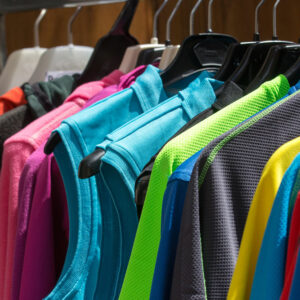
The comfort of sports jerseys is unmatched. Whether it’s one’s choice of outfit for the upcoming game, a trip to the gym, or just to run errands around town, people can get a lot of use from their sports jerseys. Plus, with athleisure being more popular than ever, now seems like the perfect time to splurge and show some love to one’s favorite sports teams while still feeling comfortable and looking effortlessly chic! Football jerseys One of the biggest sports in the country, there’s a lot of pride and joy associated with one’s team of choice. Football has made a massive impact on people’s fashion choices, making it one of the easiest picks for a casual outfit. Invest in a well-fitted jersey to wear to the next game or screening and rock the casual activewear look! Baseball jerseys It’s no surprise that baseball is on this list, given the popularity of the sport. A versatile closet staple that can be worn in and out of the stadium, baseball jerseys make for a splendid, comfortable casual-wear option. Basketball jerseys Another adaptable jersey option to have in the closet is a basketball jersey. As a sleeveless tee, these can easily be worn in the summer or layered underneath jackets or hoodies in the winter. Soccer jerseys Soccer (or football) is another sport that has made a massive impact on people around the world. From international leagues to smaller cups, there are tons of different soccer jersey options to choose from, making it an interesting addition to any wardrobe. Formula 1 Formula 1 has been gaining a stronghold in the country, with millions of people tuning in to watch the exciting races. The sport, known for its fast cars, is also well-established for its stylish drivers, who have mastered the art of flaunting their jerseys at every race.
Read More
9 mistakes to avoid while buying sports tickets online
08

9 mistakes to avoid while buying sports tickets online

The online ticketing system has enabled fans to get tickets to their favorite sports, such as baseball, football, hockey, or soccer, without leaving their couches. Buying sporting tickets online also ensures one does not have to go from one store to another, scavenging for a ticket at exorbitant prices. Despite the easy accessibility and swiftness of an online ticketing platform, it has its caveats, and going about the process could result in several mistakes. Making an impulse purchase without research Booking tickets to a favorite sporting event online might be exciting. That’s why many users rush to reserve their seats online as soon as possible. However, in doing so, one might pay a lot more for the ticket than they should. A sports event is usually listed on multiple ticket websites. One must research various ticketing platforms to determine which one offers the best price for that particular date. Not looking for offers A common mistake people make when buying tickets online is failing to look for offers. Websites usually tie up with banks to offer a range of discounts on tickets for eligible users with select cards. Moreover, the platform may also offer cashback on bookings or deals like $10 off on purchasing two or more tickets. Some online ticketing services might include food and beverages in the ticket cost. One should check all the available offers and deals on a ticketing platform before buying seats at a sports event. Getting tickets from an unverified online platform Sometimes, a website might offer a ticket deal to a sports event that is too good to be true. And that’s because it probably is a fake platform. For example, while other sellers quote prices at $100 a ticket, the spurious website might claim to sell seats for as low as $30.
Read More

Latest Articles

8 Healthy and Filling Snack Ideas for Kids
Health

8 Healthy and Filling Snack Ideas for Kids

When hunger strikes between meals, it’s important to have healthy and satisfying snacks, especially for growing kids. The stores are flooded with packaged snack options that are tempting and convenient to buy, but most of them contain high sugar levels, empty calories, and add no nutritional value. Instead, one can opt for one of the following snacking options: easy to make, highly flavorful, and provide numerous benefits that boost a child’s development. Crunchy vegetables and hummus Vegetables are another great snack choice, providing essential vitamins and minerals. For example, one can opt for crunchy vegetables like carrot sticks, cucumber slices, bell pepper strips, and cherry tomatoes. Pairing them with a healthy dip such as hummus or yogurt-based dressings can make them more appealing to kids and boost their overall health and energy levels. Yogurt Yogurt is a versatile snack packed with calcium, protein, and probiotics. The live bacteria in the product are highly beneficial for digestion. Packed with nutrients, yogurt is a supportive and tasty snack for developing and strengthening kids’ bones. One should choose plain, unsweetened yogurt and add natural sweetness by mixing fresh fruits or a drizzle of honey. One should avoid store-bought sweetened or flavored yogurt since these products contain high sugar levels. Alternatively, one can freeze yogurt in popsicle molds for a refreshing treat during warmer months. Yogurt may not be advisable, however, for infants below twelve months. Popcorn Another healthy choice for a quick snack is popcorn. This fun and crunchy snack can be ideal for movie night or after-school treats as it is nutritious whole grain rich in fiber. It can also help regulate bowel movements and is rich in antioxidants and low in bad cholesterol. One can drizzle some low-fat butter or cheese on top to make it tastier. Avoid adding too many unhealthy toppings.
17 Healthy Foods for Seniors
Health

17 Healthy Foods for Seniors

To support healthy aging, it is important to prioritize nutrition and lifestyle. Eating well-balanced meals can help one stay energized, get all the nutrients required for performing daily activities, and reduce the risk of chronic health conditions such as heart disease and diabetes. On the other hand, malnutrition can weaken the muscles and bones and leave one vulnerable to diseases. To avoid this, here are some healthy foods seniors must eat regularly. Fatty fish Fatty fish such as salmon, tuna, and mackerel are a great source of proteins and omega-3 fatty acids, which can help protect the body from cardiovascular conditions. Seniors must try to add fatty fish to their meals at least two times a week to improve their health. Those who do not enjoy the flavor of fish may also consider omega-3 fish oil supplements. Skinless poultry Skinless poultry, also known as lean meats, is a great source of protein for seniors. Cuts of chicken and turkey can be prepared with herbs and spices as low-sodium meals, especially for seniors with high blood pressure. Eggs Egg whites are also a great source of protein and heart-healthy nutrients for elders. However, the yolks are rich in cholesterol, so, preparing eggs carefully and eating them in moderation can help seniors boost their health. Dairy products Dairy products are a great source of nutrients, especially calcium and vitamin D. Yogurt is an important probiotic that can help protect the gut biome. However, opt for reduced-fat or skimmed milk options to reduce the consumption of unhealthy fats. Also, avoid buying flavored dairy products as these often contain added sugars and preservatives. Walnuts Walnuts are another excellent source of omega-3 fatty acids, especially for vegans and vegetarians. They are a rich source of fiber and help protect heart health. Almonds Rich in unsaturated fats, almonds can help lower bad cholesterol (LDL) levels, making them a healthy snack or additive to meals.
8 Gardening Mistakes and Ways to Avoid Them
Everything Else

8 Gardening Mistakes and Ways to Avoid Them

Transforming your backyard can be an exciting project. You could create a hangout spot, install sculptures, or even add a garden. However, adding plants to a backyard can require considerable time and effort. If you are taking up gardening for the first time, you do not want to miss key steps that affect the look of the space. So, to help you get started, here are a few gardening mistakes and how to avoid them: Planting excessively You may spend immense amounts of time scrolling through seed catalogs and looking forward to fresh vegetables and sometimes can end up planting too much. A big garden may require a lot of effort and can become overwhelming. So, if you have just taken up gardening, start small. First, shortlist your five favorite vegetables and herbs, and grow them. As you have some success with these plants, introduce new seeds to the space to gradually expand the garden space. Planting too early Seeds require an optimum temperature to sprout and grow. If some seeds thrive in warmer temperatures, the yield may freeze and die if you try to grow them in spring. The seed may also rot without sprouting. So, you must check what climates are suitable for each type before spreading them across the garden. One of the best ways to avoid planting earlier than required is to buy a good soil thermometer and note the usual first and last frost dates in your area to avoid this period for starting a garden. Overlooking the soil type Another mistake to avoid is planting seeds without checking whether the soil is loamy. If your backyard does not have loamy soil—rich in silt, clay, sand, and organic matter—the seeds will get sufficient nourishment, and the saplings may grow weak and perish quickly. So, before you start a garden, ensure you amend the soil to make it ideal for plant growth.